
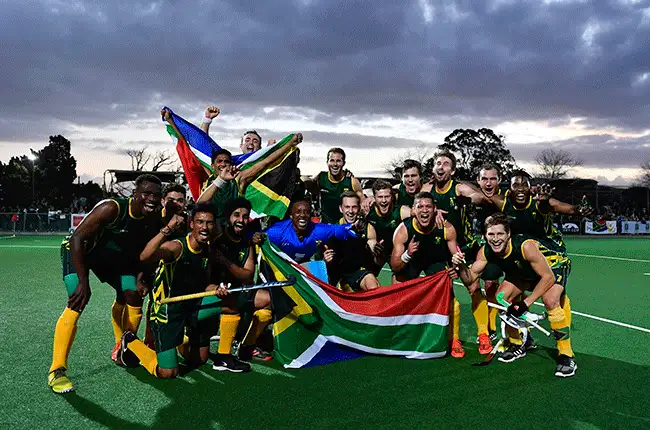

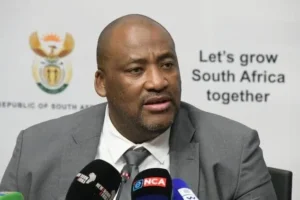
Minister of Sport, Arts and Culture – Gayton McKenzie has approved R3 million funding for South Africa’s men’s and women’s hockey teams ahead of the 2026 FIH Hockey World Cup after growing concerns over financial challenges. The World Cup will be jointly hosted by Belgium and the Netherlands from August 14 to 30, 2026.
McKenzie has allocated a modest amount in governmental assistance for the teams as a move that has drawn mixed reactions from the hockey community and beyond. He announced this officially on social media on Thursday, July 23, 2026 and stated that, “I have approved departmental financial assistance of R3 million to enable both the South African Men’s and Women’s National Hockey Teams to participate fully funded at the 2026 FIH Hockey World Cup, to be jointly hosted by Belgium and the Netherlands from 14 to 30 August.”
Despite of this commendable gesture, the figure falls alarmingly short considering the extensive costs that are associated directly with competing on an international stage. In response to the financial challenges, the South African Hockey Association launched national crowd-funding campaigns that aims to ensure that both teams can adequately prepare and compete.
Their rallying cry appeals to South Africans to support their athletes, who arrived in Europe as reigning African champions, and have proved their mettle by conquering the continent.
Co-Founder of ProTouch Africa – Rebecca Eliot has emphasised the broader implications of supporting athletes on the global podium. She stated that when an African athlete stands on a world podium, the impact reaches far beyond the medal, hoping that victories could redefine perceptions of the continent’s potential.
Such appeals for funding have taken on added urgency following an open letter shared by Onthatile ‘That’ Zulu, a prominent player on the women’s team.
In her message, Eliot expressed discontent over the financial support disparity between sports, citing the R31 million spent by the Department of Sports on the government’s delegation to the FIFA World Cup.
Also, Zulu mentioned that as a national player, she was very triggered by the amount of money that was spent going to support Bafana Bafana. Her sharp observations have sparked conversation about the financial landscape that South Africa’s hockey players must navigate, often footing the bill for international representation and preparation themselves.
Zulu explained in detail how the financial burden affects team morale and performance, revealing that players have previously relied on personal funds and family support to cover costs. She added that some players face contributions of about R68,000 towards World Cup preparations and underscored the reality of athletes who competently strive to represent their nation amid financial hardships.
Despite all these challenges, Zulu remained inspired by the success of other South African teams, echoing a sentiment that many athletes share, as there’s so much talent and potential, and to give it that investment, we can do so much more, said Eliot. She highlighted the need for proper funding and preparation, clarifying that athletes should focus on performance, free from the burden of financial worries.