
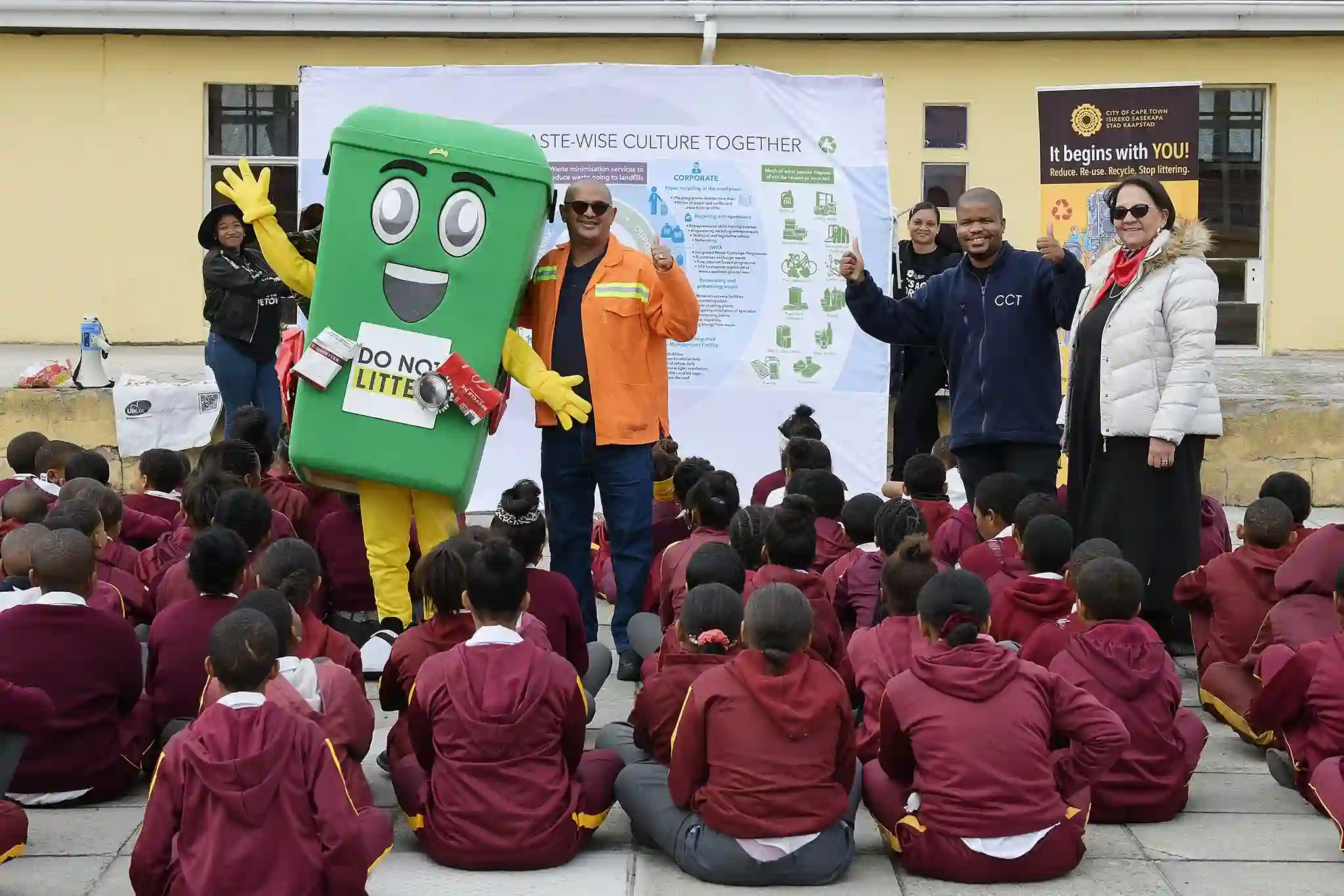

Cape Town: As schools reopen, the City of Cape Town encouraged learners, parents, teachers and school governing bodies to place waste reduction and environmental responsibility at the centre of school life.
By finding practical ways to reduce, reuse and recycle waste will help schools in saving money, and will also play a vital role in shaping a waste-wise generation. Schools remain one of the most important spaces to build lifelong habits that support a cleaner, healthier city.
The City of Cape Town is calling on teachers to continue integrating waste education into the classroom, by helping learners understand the impact of littering, excessive waste and poor disposal practices. Teaching waste awareness from an early age empowers young people to become responsible citizens and environmental leaders within their homes and communities.
Simple actions can significantly reduce the amount of waste sent to landfill, such as:
- By avoiding products with excessive packaging.
- By buying in bulk, and use refills and concentrates, to reduce waste.
- Choosing products made from recycled or recyclable materials.
- Avoiding single-use items, such as disposable plates at school events, and encourage learners to bring their own containers.
- Providing learners with reusable lunch boxes and returnable drink containers and discourage single-use packaging.
- Starting a compost heap or use a composting container and, where possible, use compost in a school food garden.
Furthermore, the City of Cape Town encourages more schools to consider implementing recycling programmes, which can also create small income streams to support school activities.
Considering this, the City has developed guidelines to assist schools with waste audits, establishing waste management committees, infrastructure needs, and promoting recycling within the surrounding community. The guide is available on the City’s website, and it includes ways to compost the school’s organic waste.
Member of the Mayoral Committee for Urban Waste Management – Alderman Grant Twigg said that when you consider the thousands of tonnes of waste produced in Cape Town each day, it becomes clear that landfill disposal alone is not a sustainable solution. While the landfills are well managed, they need to reduce waste at source and significantly increase reuse and recycling.
According to Twigg, the schools play a critical role in this journey. By continuing waste education in classrooms and using tools such as the Anti-Litter Mascot Bingo, they can instil responsible habits early and move closer to the goals set out in the National Waste Management Strategy, including reducing waste to landfill and working towards a zero-waste society.
To spread this message, the anti-litter mascot, Bingo, of the City of Cape Town is available to visit schools and educate learners in fun and engaging ways. Bingo helps reinforcing positive waste behaviour, including litter prevention, recycling, and caring for public spaces.