
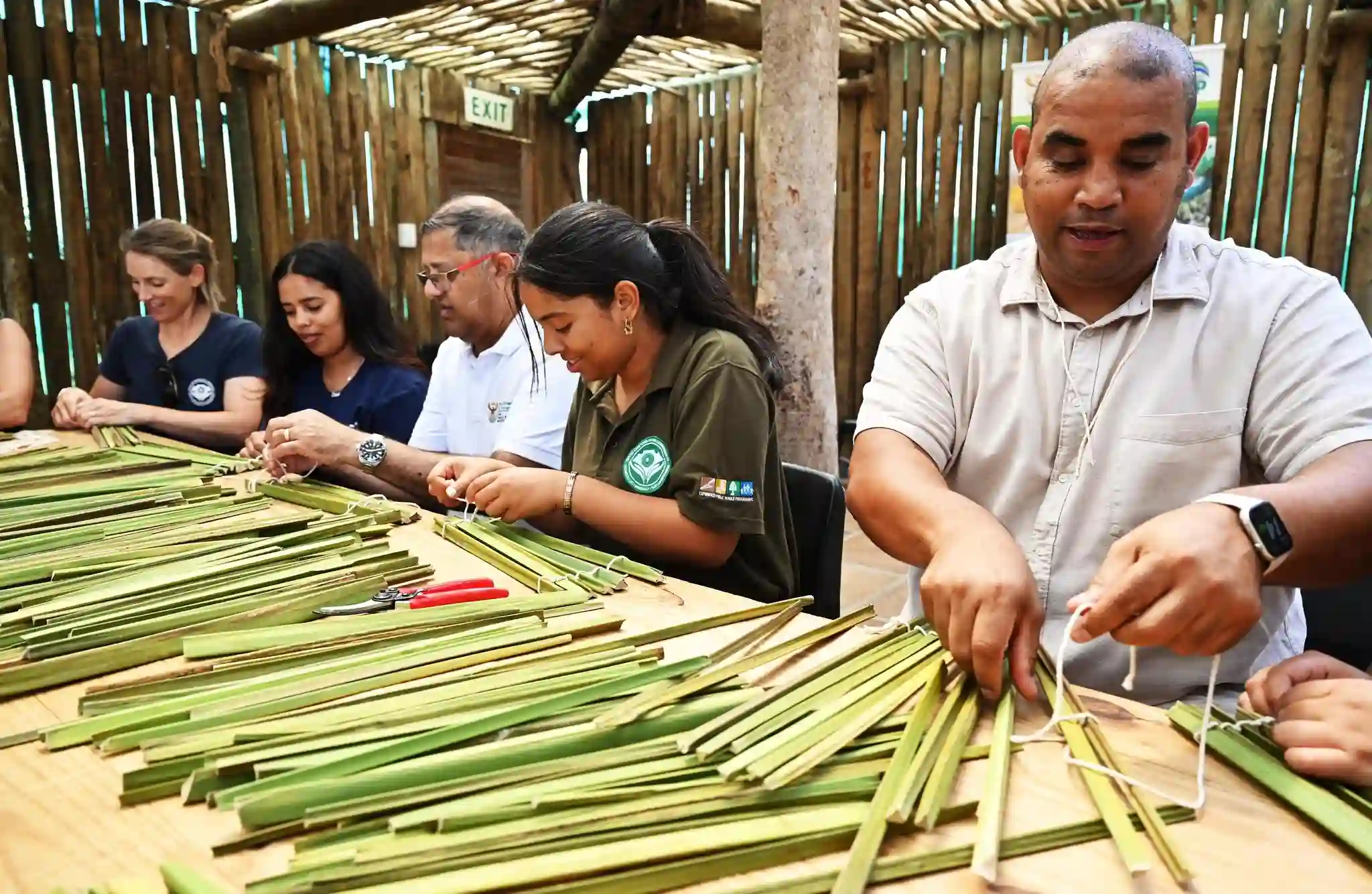

Cape Town: The National Department of Forestry, Fisheries and the Environment (DFFE), together with the City of Cape Town and a RAMSAR Wetlands City, celebrated the World Wetlands Day at the Rondevlei section of the False Bay Nature Reserve, which is a designated RAMSAR site.
Reportedly, it will follow the theme for World Wetlands Day 2026 i.e. ‘Wetlands and Traditional Knowledge: Celebrating Cultural Heritage’. The attendees met the River Wardens of the City of Cape Town who are part of a City-led programme to develop their knowledge of wetlands and biodiversity.
The False Bay Nature Reserve was designated as a RAMSAR site on World Wetlands Day in 2015 and claimed this status by meeting nine criteria related to its ecological value, including its abundance of biodiversity, species rarity and migrating capacity.
Further, City of Cape town was declared as a RAMSAR Wetland City in 2022. Given the commitment to protect the wetlands within the boundaries, the City commenced with the River Warden Skills Development Programme in partnership with Nature Connect on July 01, 2024. The programme targets the youth and women from communities surrounding the False Bay Nature Reserve, Zandvlei Nature Reserve, Edith Stephens Nature Reserve, and Table Bay Nature Reserve.
This programme entails three-year training in conservation-based stewardship and an FET certificate in Nature Conservation (NQF 4 qualification), as well as temporary employment with the City of Cape Town while enrolled. Till date, 57 participants have received training, mentorship, and temporary employment opportunities.
Deputy Mayor and Member of the Mayoral Committee for Spatial Planning and Environment – Alderman Eddie Andrews said that the River Wardens are hands-on with river and wetland restoration work. They remove invasive alien species, do litter clean-ups and habitat rehabilitation, and are also involved in community outreach programmes, stakeholder engagements and public awareness initiatives.
These are very important tasks because they need the communities, especially those who live adjacent to reserves, to help them protect these natural assets for future generations.
Notably, eight of the 22 River Wardens that are placed at the False Bay Nature Reserve, operate here at Rondevlei. They are the local champions and future conservation leaders who monitor ecosystems, educate their neighbours and contribute to the biodiversity goals of the City of Cape Town, all while caring for their own natural surroundings.
River Warden teams removed significant quantities of alien invasive vegetation and solid waste from City reserves and surrounding areas from January 01, 2025 to December 31, 2025. The estimated totals are:
- 141,280 kg of alien invasive biomass
- 77,648 kg of solid waste
The quantities are estimated using average bag weights, where alien invasive biomass amounts to approximately 10 kg per bag and solid waste to approximately 8 kg per bag. These estimates provide a consistent and practical method for tracking environmental impact across sites.
Alderman Eddie Andrews said that the City of Cape Town is serious about the protection of the wetlands, and they are investing a lot of time, resources and energy in preserving these precious resources.
The River Warden Skills Development Programme improves the health of the ecosystems of the city while also creating pathways to vital employment opportunities in the environmental management sector. The health and future of the wetlands rely on the ability to build partnerships with the communities, the youth, and NGOs like Nature Connect.
Also, Rondevlei has a picnic area, museum, six birdhides and two towers where visitors can observe the diverse birdlife and plants. It is about 230 ha in size and home to the city’s only hippo pod. Hippos were re-introduced to Rondevlei in 1981 after a 300-year gap to control Vleigras, an alien grass from South America, which was smothering the wetland at the time.