
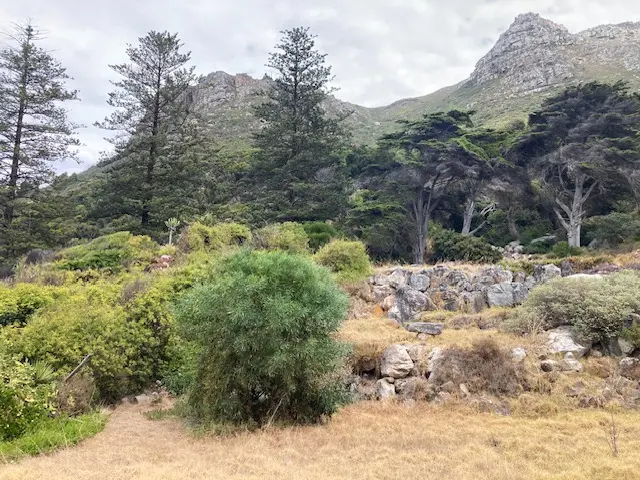

The City of Cape Town is proud to announce that the Battle of Muizenberg site has recently been listed in the Heritage Western Cape’s (HWC) provincial gazette. It has proclaimed the status of the Battle of Muizenberg as a Provincial Heritage Site (PHS).
The Environmental Management Department of the City of Cape Town submitted a Section-27 of the National Heritage Resources Act nomination to HWC in 2024. The HWC Council approved the nomination in June 2025. The formal protection was then officially gazetted on March 27, 2026.
Reportedly, the Javia Mosque in Strand is another notable nomination which was submitted by members of the public and was also gazetted as a PHS last week.
Deputy Mayor and Member of the Mayoral Committee for Spatial Planning and Environment – Alderman Eddie Andrews stated that the proclamation of the Battle of Muizenberg site is an important milestone in the City’s efforts to protect the irreplaceable heritage and cultural landscapes of the growing city.
Andrews said that he would like to congratulate the Environmental Management teams in their efforts with this important nomination. Also, the members of the public who put in the work to submit a nomination for the Javia Mosque in Strand as he knows this mosque a cornerstone of the Muslim community’s heritage.
For the Battle of Muizenberg site, this is a cultural landscape site with various layers of significance one, being that evidence of shell midden material and its location on the False Bay coastline suggest the use of the site by indigenous groups well before the occupation of Muizenberg by the Dutch in the mid-17th Century, said the Deputy Mayor.
About Battle of Muizenberg Site
The declaration of Battle of Muizenberg as a PHS includes the formal protection of archaeological sites, landscapes, natural features of cultural significance; structures and unmarked burials situated on erven 87052, 87053, 87056 and a portion of erf 163442 located at 220 Main Road, Muizenberg.
The Battle of Muizenberg is a cultural landscape site with various layers of significance which includes evidence of shell midden material and its location on the False Bay coastline suggest the use of the site. It is an indigenous group known well before the occupation of Muizenberg by the Dutch in the mid-17th Century.
Remains of the stone walls, redoubts, and breastworks of the Battle of Muizenberg conflict between the Dutch and British in 1795. The Dutch defence fortifications were overseen by Louis Michel Thibault, military engineer at the time and later as the prominent architect and builder of 18th century in Cape Town.
The Corps Pandoeren came from the Cape coloured community, where many from the Moravian Mission at Genadendal, and played a critical role in the battle. The battle was directly related to broader international conflicts between the Dutch, British and French. It was an important event in the history of South Africa that resulted in the first British occupation of the Cape.
About Javia Mosque in Strand
The now Provincial Heritage Site known as the Javia Mosque (Masjid) is located at 43 Market Street in Strand and is the oldest surviving place of worship and a cornerstone of the Muslim community’s heritage. This declaration honours the mosques historical, cultural, spiritual and architectural significance.
Built between 1850 and 1870 by freed slaves and free blacks, the place embodies the resilience and spiritual endurance of early Muslim settlers. As the first formal place of worship in Strand, the mosque was central to the establishment and growth of Islam in Mosterd’s Bay, the historical name for Strand. The mosque hosted daily prayers, Friday congregational worship, religious festivals, and events which served to reinforce community cohesion.
The Mosque played a vital role in education and cultural preservation. This served as a centre for Quranic learning and religious instruction. Despite forced removals under the Apartheid era Group Areas Act (1950) and decades of neglect, the mosque remains a powerful symbol of defiance against systemic oppression.
Architecturally, it is also a rare surviving example of 19th-century clay brick construction, that reflects the craftsmanship and ingenuity of its builders.