
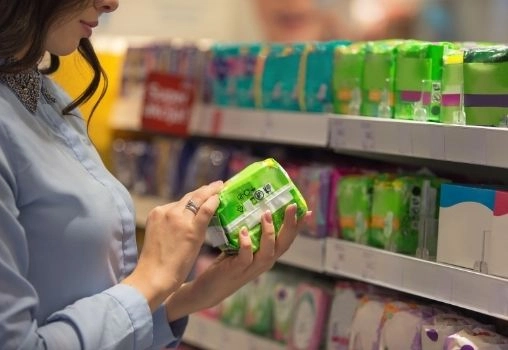

South Africa: The UFS study detects hormone-disrupting chemicals in menstrual products sold in South Africa. These menstrual products are used by millions of South Africans every month.
Reportedly, new research from the University of the Free State has found that every sanitary pad and pantyliner tested contained hormone-disrupting chemicals, even those marketed as ‘chemical-free’. UFS scientists are calling for greater transparency, stronger safety standards, and continued research to protect consumer health.
Published in Science of the Total Environment, the study found that every sanitary pad and pantyliner tested contained at least two endocrine-disrupting chemicals (EDCs), that raises concerns about consumer safety, transparency, and long-term exposure.
The research was conducted by a UFS team, including Janine Blignaut (PhD candidate), Dr. Gabre Kemp from the Department of Microbiology and Biochemistry, Prof. Elizabeth Erasmus, Prof. Deon Visser, and Prof. Marietjie Schutte-Smith from the Department of Chemistry.
Head of the Department of Chemistry at the UFS – Prof. Visser said that the study highlights a concerning reality regarding the safety of menstrual products. According to him many sanitary pads and liners contain hormone-disrupting chemicals, even when they are marketed as being ‘free from harmful chemicals’.
𝗨𝗙𝗦 𝘀𝘁𝘂𝗱𝘆 𝗱𝗲𝘁𝗲𝗰𝘁𝘀 𝗵𝗼𝗿𝗺𝗼𝗻𝗲-𝗱𝗶𝘀𝗿𝘂𝗽𝘁𝗶𝗻𝗴 𝗰𝗵𝗲𝗺𝗶𝗰𝗮𝗹𝘀 𝗶𝗻 𝗺𝗲𝗻𝘀𝘁𝗿𝘂𝗮𝗹 𝗽𝗿𝗼𝗱𝘂𝗰𝘁𝘀 𝘀𝗼𝗹𝗱 𝗶𝗻 𝗦𝗼𝘂𝘁𝗵 𝗔𝗳𝗿𝗶𝗰𝗮
Menstrual products are used by millions of South Africans every month – but new research from the University of… pic.twitter.com/U2VObbaMBL
— UFS (@UFSweb) February 16, 2026
For test, the UFS research team analysed 16 brands of sanitary pads and eight types of pantyliners popular in South African retail stores. The study focused on three groups of endocrine-disrupting chemicals (EDCs):
- Phthalates
- Bisphenols (including BPA)
- Parabens
The results showed widespread contamination across all products that were tested. Every single pad and liner contained at least two of the target chemicals.
Bisphenols were detected in 100% of sanitary pads and 75% of pantyliners, while parabens were found in more than 81% of pads and 75% of liners. Phthalates were present in all pantyliners tested and in 50% of sanitary pads. The researchers noted that these substances are not always added intentionally, but may migrate into products from plastics, adhesives, and manufacturing processes.
Considering this, Prof. Visser explained that the heat-pressing process can cause these chemicals to move into the top layer that touches your skin. Its long-term exposure matters. Although the levels detected in a single product may appear small, the researchers emphasise that the concern lies in repeated exposure over time.
Menstrual products come into contact with mucosal tissue, which absorbs chemicals more quickly and directly, than normal skin. Most individuals use these products for several days each month over several decades. This repeated contact may contribute to cumulative exposure, which has been linked to hormonal imbalances, fertility problems, endometriosis, and even certain types of cancer.
The researchers said that the findings underscore the need for clearer labelling, stronger chemical standards, and continued monitoring of everyday menstrual products. This study serves as a wake-up call, that current regulations and ‘clean’ labels in South Africa may not be providing the protection, that consumers expect.