
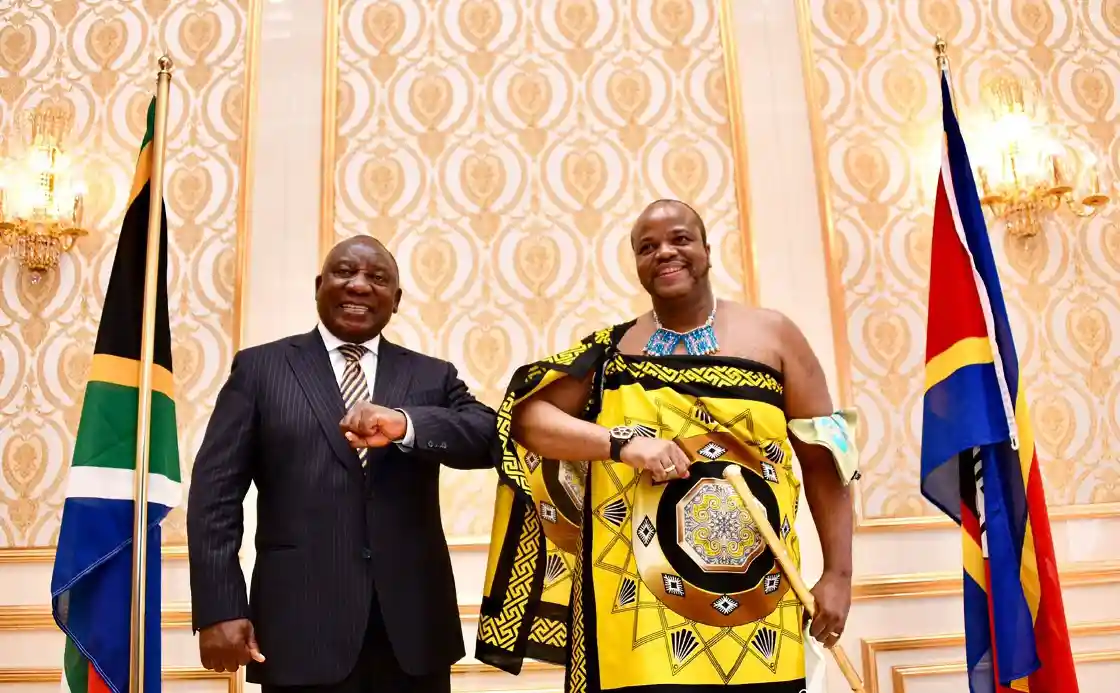

Eswatini: The EmaSwati Sovereign Restoration Committee (ESRC), a South Africa based group that supports the Eswatini monarchy, has submitted petitions to South African President Cyril Ramaphosa and the African Union. The group is calling for the return of land it claims belongs to Eswatini.
The land also includes all of Mpumalanga and parts of KwaZulu-Natal province in South Africa that Eswatini has maintained similar historical claims for decades. In 2025, King Mswati-III formed a Border Restoration Committee to explore the issue.
Historical Land Claims
According to the committee, the petition focuses on territories, which it says were separated from the Swazi Kingdom during colonial boundary changes in the 19th century.
Among the highlighted areas are regions around Pongola and Ingwavuma in northern KwaZulu-Natal, as well as parts of present-day Mpumalanga. The ESRC maintains that these areas have historical and cultural ties to the Swazi Kingdom and believes their status should be revisited.
The EmaSwati Sovereign Restoration Committee (ESRC), a South Africa based group that supports the Eswatini 🇸🇿 monarchy, has submitted petitions to South African 🇿🇦 President Cyril Ramaphosa and the African Union.
The group is calling for the return of land it claims belongs to… pic.twitter.com/P5Oo4pGZwI
— Africa View Facts (@AfricaViewFacts) July 14, 2026
Appeal to President Ramaphosa and the African Union
In its petition, the committee urged President Cyril Ramaphosa and the African Union to acknowledge what it describes as historical injustices arising from colonial-era land divisions.
The ESRC is calling for the matter to be addressed through diplomatic engagement and dialogue, arguing that historical records and pre-colonial boundaries should form part of discussions on the issue.
No Response from South Africa
As per the sources, neither the South African Presidency nor the African Union had publicly responded to the petition, yet.
There has also been no indication that the South African government is considering changes to the country’s internationally recognised borders. Any alteration to national boundaries would require extensive legal, constitutional and diplomatic processes involving the affected states.
A Long-standing Issue
The question of historical land claims has surfaced periodically over the years. Eswatini has previously argued that land lost during the colonial era should be reconsidered, while South Africa has continued to recognise the existing international borders, which was established after both countries gained independence.
International borders are generally governed by treaties and international law, and any territorial changes would require agreement between the countries involved under applicable legal frameworks.