
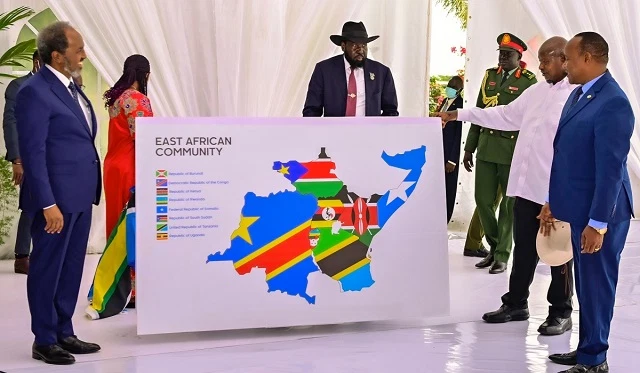

The East African Community (EAC) has set 2031 as the target year to launch its single regional currency. The original timeline was delayed by the COVID-19 pandemic and other economic challenges.
EAC officials stated that preparations are ongoing, with a phased rollout expected once the member states such as Kenya, Uganda, Rwanda, Burundi, South Sudan, Somalia, Congo and Tanzania meet the necessary economic criteria. The common currency is expected to simplify cross-border trade and deepen regional economic integration.
Will Transform Regional Trade
The proposed single currency aims to transform regional trade by eliminating exchange-rate barriers and reducing transaction costs among the member states. Supporters of the initiative believe that it could make East Africa one of the most dynamic integrated economic regions of Africa by offering businesses and consumers a larger and more efficient common market.
EAC is accelerating discussions on a proposed East African Confederation Constitution beyond monetary integration. A political framework is also designed to deepen cooperation, strengthen regional institutions and move the bloc closer to its long-term goal of greater political and economic unity.
The East African Community (EAC) has set 2031 as the target date for launching its single regional currency.
The original timeline was delayed by the COVID-19 pandemic and other economic challenges.
EAC officials say preparations are ongoing, with a phased rollout expected once… pic.twitter.com/oDm7h6Ceay
— African Hub (@AfricanHub_) July 17, 2026
Introduces East African e-Passport
EAC has achieved progress in regional integration by introducing East African e-Passport, which enables citizens of member states to travel comfortably across borders. The initiative has significantly improved the movement of people, enhanced regional connectivity and fostered closer social and economic ties throughout East Africa.
Such important economic reforms and policy coordination remain a common currency and becomes a reality. EAC’s renewed commitment to the 2031 target has generated fresh optimism that the East Africa is steadily advancing towards a future of deeper integration, greater economic resilience and shared regional prosperity.
Accelerates Legal Monetary Union
Chairperson of the Council of Ministers – Rebecca Kadaga announced about this initiative during EAC’s Financial Year 2026-27 Budget Speech to the East African Legislative Assembly (EALA). This shows that only four of the bloc’s out of eight partner states have achieved the 8% protocol.
This initiative will meet the requirement to hold foreign exchange reserves, equivalent to at least 4.5 months of imports three have kept fiscal deficits by including grants within 3% of GDP, and four partner states comply with the 50% of GDP public debt threshold, measured in net value terms.
The community has accelerated work on the legal architecture of the monetary union even as its economic pre-requisites lag. EALA further re-considered and passed the East African Community Statistics Bureau Bill and the East African Community Surveillance, Compliance and Enforcement Commission Bill, both were reconsidered before final passage.