
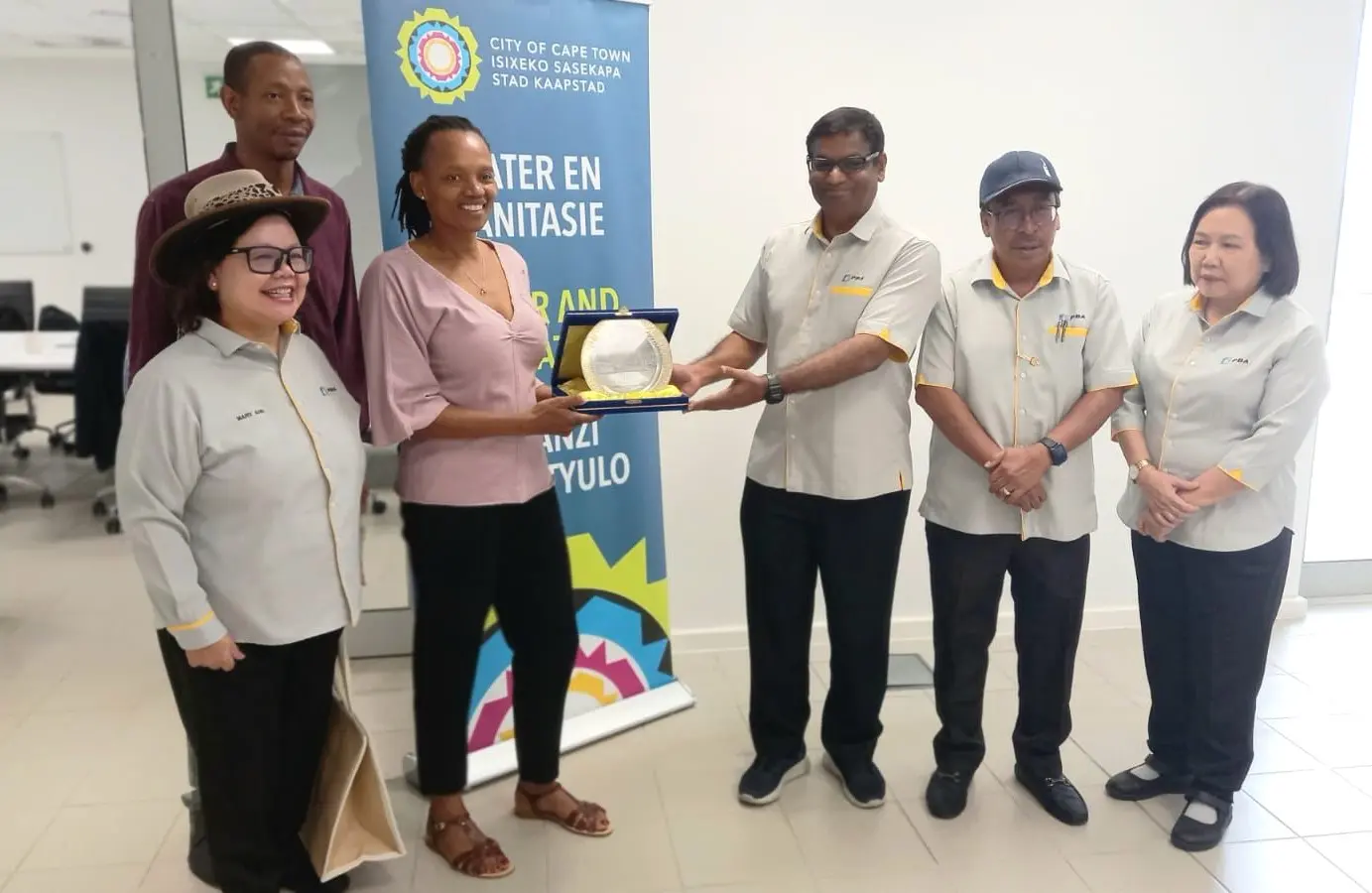

Cape Town: The Water and Sanitation Directorate hosted a delegation from the Penang Water Supply Corporation (PWSC) at Zandvliet Wastewater Treatment Works (WWTW). It is a knowledge-sharing platform that enabled discussions about lessons learnt from Cape Town’s 2018 drought and preventative plans put in place to become a water-resilient city through alternative water supply sources from 2031.
Recently, a delegation from the Malaysian PWSC, which a state-owned utility responsible for water supply services in Penang, Malaysia, visited Cape Town. The PWSC manages the full water cycle from raw water abstraction and treatment to distribution, billing and ensuring sustainable supply for residential, commercial and industrial users across the state.
During the visit, the City of Cape Town presented operational measures that reduced consumption during the drought, including:
- Pressure management
- Proactive communication campaigns to raise public awareness
- Water conservation interventions, including indigent water leak repairs, ageing water pipe replacements and promoting the uptake of treated effluent for irrigation and industrial uses
- Door-to-door engagements with the city’s highest water users (including the agricultural sector, carwashes, recreational facilities, etc.)
Also, an interactive discussion was conducted about the City’s water regulations and by-laws, future installation of smart water meters through the Advanced Metering Infrastructure (AMI) programme, drought water restrictions, revenue and tariff structures and the City’s high-water-consumption GIS tracking capabilities.
The delegation went on a behind-the-scenes tour of the Zandvliet WWTW, one of the City’s flagship facilities. Zandvliet WWTW played a strategic role in the City’s New Water Programme, particularly in advancing water reuse initiatives. High-quality treated effluent from the facility will be conveyed to the future Faure New Water Scheme to be developed at the Faure Water Treatment Plant (WTP).
Considering this, Member of the Mayoral Committee for Water and Sanitation – Councillor Zahid Badroodien said that the FNWS will use sophisticated technology and a multi-barrier purification process to treat high-quality effluent to safe drinking water standards.
He added that this water will then be blended with dam water, treated again at the existing Faure WTP and distributed to households and residents through the City’s water supply network.
Cllr Badroodien further stated that implementing this strategy will increase and diversify the City’s drinking water supply by between 70 and 100 million litres per day. It forms part of the City’s action plan to build a resilient water supply system capable of withstanding future climate shocks and drought.