
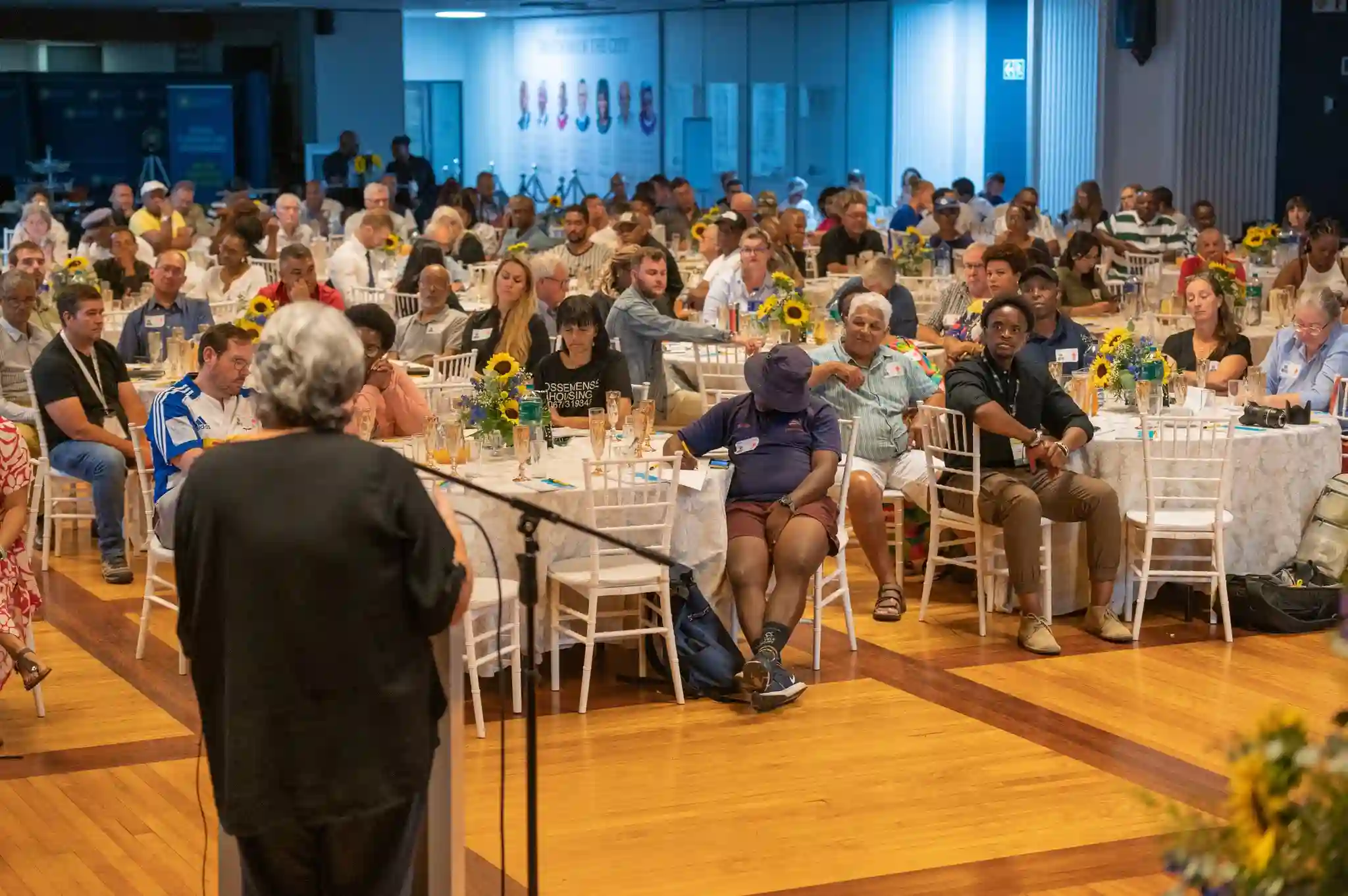

The City of Cape Town has launched the Spatial Planning Collective (SPC), a platform for regular engagement with nominated stakeholder representatives about spatial planning policies and planning processes in their sub-councils and neighbourhoods. A launch event was also observed on Saturday, Jan 24, 2026 and was attended by over 220 people who were nominated by their residents’ associations, stakeholders, and organisations to serve on the respective SPCs at the 20 sub-councils across Cape Town.
The Spatial Planning Collective is a programme developed by the Urban Planning and Design Department (UPD) of the city to educate, empower and engage community stakeholders at the 20 sub-councils across Cape Town about spatial planning policies, such as the Municipal Spatial Development Framework, District Spatial Development Frameworks, Local Spatial Development Frameworks, and related planning processes.
The official launch took place on Saturday, January 24, 2026, at the Banqueting Hall at the Civic Centre, where the 220 nominated representatives from communities and stakeholder organisations gathered to meet the Deputy Mayor, Aderman Eddie Andrews of the city, and engage with the senior spatial planning officials, among which the Director for Urban Planning and Design – Erika Naude, and members of the Spatial Planning and Environment Portfolio Committee.
According to Deputy Mayor Eddie Andrews, the spatial planning affects every Capetonian, from the residents, to property and business owners, and investors. The spatial planning is guided by a number of policy documents that determine land use, the type and location of development, the built footprint and urban edge in the medium- to long-term.
The spatial policies also impact landowners and developers as these plans inform and guide the decisions when we assess development and land use applications. Thus, these policies determine how the neighbourhoods and business and industrial areas should develop over time to meet the demands of a growing population.
Andrews said that he is aware of the huge interest residents have in spatial planning. He mentioned that he often gets emails and phone calls about their concerns and aspirations. But, he have also noticed that the majority of the residents and stakeholders have limited knowledge on how to collaborate with them, or they do not know enough about spatial planning to meaningfully contribute to shaping spatial policies.
The Spatial Planning Collective (SPC) has been created to fill this void, namely to provide local SPC forums across Cape Town in each sub-council area where residents can be empowered to meaningfully participate; to facilitate regular engagements with residents and stakeholders on spatial matters; and to also provide the necessary training and knowledge to those who serve on the SPCs.
Andrews is excited about this programme and believe it has the potential to make a huge difference in how they relate with the communities on spatial matters. This is a great opportunity to join hands with the communities and plan together for a City of Hope.