
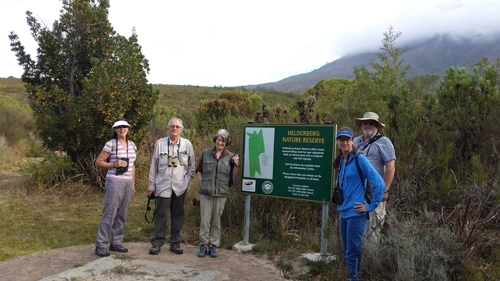

Cape Town: Helderberg Nature Reserve has become visitors first choice especially for fitness freaks to consider and experience the thrill when choosing a hike.
The City of Cape Town has encouraged visitors to the Helderberg Nature Reserve to choose hikes suitable to their fitness and experience levels, and to also take into consideration the weather on the day. Visitors are advised to pick and choose between easy shorter walks, longer hikes that are more challenging, and those for advanced hikers involving scrambling on the upper ranges of the Helderberg.
Making the right choice is critical for personal safety and security. As the Helderberg Nature Reserve is one of Cape Town’s most popular outdoor destinations, it offers a wide range of well-maintained hikes in a pristine environment with breathtaking views.
Following recent emergencies in the wider area, the City wants to remind visitors to hike in groups and carefully consider and choose hikes.
The Helderberg Nature Reserve mainly features eight main trails to track on, that are:
Woodies Walk, West Peak and The Dome
Majority of these trails extend beyond the official boundaries of the reserve. West Peak and The Dome (pink routes) are for experienced hikers only as they are steep, demanding trails that take hikers to the top of the Helderberg Mountain.
Hikers often need to scramble, and the downhill sections are steep with loose stones, including exposure to heights. However, hikers are rewarded with uninterrupted 360-degree panoramic views over False Bay, the Cape Winelands and Table Mountain in the distance.
Waboom Trail, Protea Trail, Leopard’s Loop, Watsonia Trail and Sugarbird Walk
These are supported by a network of interlinked paths that include the Siskin, White-eye, Batis, Mongoose, Caracal and Baboon Traverse. These hikes are well-suited for regular hikers.
High altitude hikes like West Peak and The Dome
The trails with steep traverses and drops such as Leopard’s Loop and Woodie’s Walk should be avoided during bad weather, here.
Siskin, Batis and White-eye Trails
Starting near the picnic areas, the Siskin, Batis and White-eye trails feature shaded, canopied sections with trees and ponds along some sections. For those who want to extend their walk, these paths seamlessly link with the Sugarbird trail, which is a popular circular route.
Waboom, Watsonia, Leopard’s Loop and Woodies Walk
Waboom, Watsonia, Leopard’s Loop and Woodies Walk traverse wetter, more heavily vegetated ravines with mountain streams, shaded kloofs, and slightly more demanding rocky pathways that require good balance and strength.
As per the official tourism department, the trails remain open during the reserve’s official operating hours from April 01 to October 31, 2026 between 07:30 a.m. to 05:30 p.m. A dedicated reserve staff monitor the trails almost daily. They do inspections for hazards and proactively close trails in the event of extreme weather.
Reserve staff and volunteers can offer guidance on hiking trails, and staff are also available to assist with emergencies. No booking is required for the standard hikes; simply pay the entrance fee at the gatehouse. Friends of the Helderberg Nature Reserve facilitate guided options for visitors who want to explore the reserve with local experts.
Deputy Mayor and Member of the Mayoral Committee for Spatial Planning and Environment – Alderman Eddie Andrews stated that as far as he is concerned, Cape Town is the most beautiful city in the world. They are privileged with an abundance of natural places where visitors can get away from the demands and noise of daily life.
Helderberg Nature Reserve is one of these gems, but they need visitors to be cautious when choosing a hike, and to come prepared. The obvious things are enough food, water, a first aid kit, proper hiking shoes, and clothing for all weather. Then, choose a hike that suits your capabilities and experience.
Andrews added that the weather is an unknown factor that dictates safety. Extreme weather can turn a friendly and inviting mountain into a harsh terrain where the risk of severe medical emergencies such as hypothermia or heat exhaustion can happen quickly. Please prepare thoroughly, never hike alone, make sure your phone battery is fully charged, and that you have emergency contact details saved.
The reception is generally good along the majority of trails, but steep topography and deep valleys frequently block signals and then you may need to walk a bit to where reception is. Most importantly, be safe and enjoy the hike, said the Deputy Mayor.