
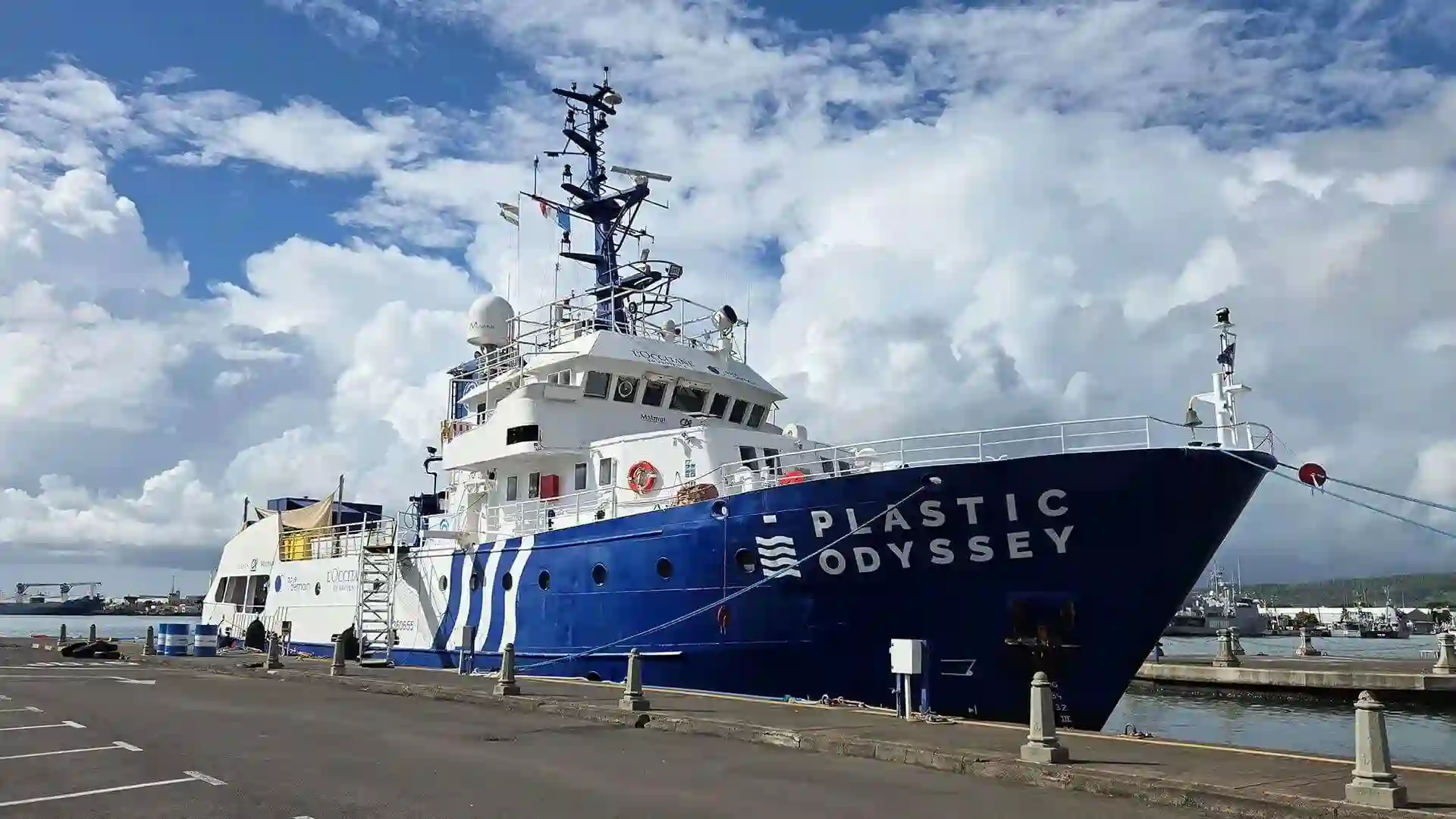

Cape Town has welcomed the global anti-plastic pollution expedition known as ‘Plastic Odyssey’. The ship is staying from Dec 08 to 22, 2025 bringing its travelling lab, exhibition events and local training sessions to the city.
Reportedly, the arrival of Plastic Odyssey will showcase the practical recycling solutions and community programmes, which are specially designed to cut the plastic waste at source.
For over two weeks the expedition will run the public ship-tours, documentary screenings and a Nomadic Expo that shares alternatives instead of single-use plastics.
However, the expedition team will open a micro-factory and will host an On-Board Laboratory session that aims to network with entrepreneurs for major recycling projects.
Furthermore, the locals can look for the machines that turn waste into usable material and can join workshops on setting-up small-scale recycling operations.
Plastic Odyssey is on a mission to cover three-year expedition that seeks, tests and shares concrete solutions to plastic pollution. This vessel combines a travelling exhibition along with technical training and a research programme to help cities and coastal communities to build the local recycling capacity.
This demands hands-on demonstrations and expects talks with the expedition team and opportunities for partners to register for incubation sessions.
For further details on events, registration and school visits, the Plastic Odyssey stopover programme interested ones can look upto the OnBoard Laboratory session in Cape Town.
Plastic Odyssey
It is a global, three-year expedition, floating laboratory ship, that launched from France, to find, test, and share low-cost, replicable solutions for plastic waste. It aims to build a network of local recycling entrepreneurs and empower communities to turn waste into valuable products like building materials.
The ship is equipped with onboard labs and micro-factories, travels to coastal areas to train locals, demonstrate technology, and promote sustainable livelihoods, preventing plastic from reaching the deep ocean by creating local recycling economies.
It is a 40-meter ship serving as a mobile research facility with labs, training rooms, and recycling workshops. The crew includes researchers, engineers, activists, and sailors who live a zero-waste lifestyle onboard.