
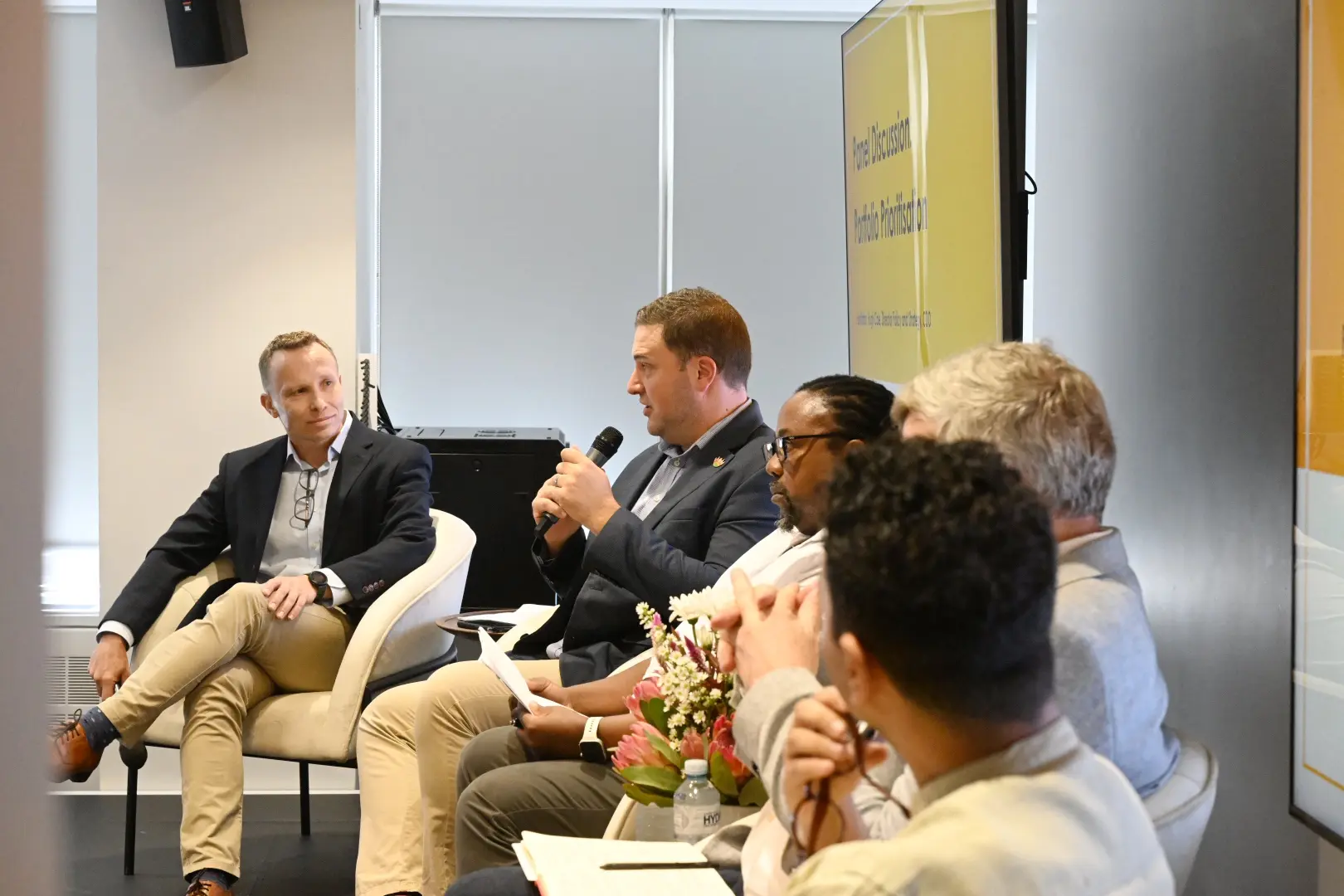

Cape Town: Mayor Geordin Hill-Lewis stated that Cape Town is on track to achieve greater infrastructure investment than all three Gauteng metros combined. The Mayor was speaking at the launch of the City’s latest Infrastructure Report, which shows how Cape Town has become South Africa’s leading metro for infrastructure investment.
Reportedly, Cape Town has a R120bn 10-year infrastructure pipeline overall a South African record. Around 130,000 construction-related jobs will flow from capital investment in the current term of office alone, with an economic impact of R17bn.
To meet the infrastructure needs of a growing city, Cape Town has raised the level of investment, with the 27/28 draft capital budget more than double the size of the first budget of this term (R14.7bn vs R6.9bn in 22/23). By 27/28, the City’s capital budget will also exceed that of all three Gauteng metros (R14.4bn combined).
Overall, 45% of investment is in Basic Services (Water, Sanitation, Energy), with 18% for Transport, 11% for Housing, and 8% for Public Spaces and Amenities.
Mayor Geordin Hill-Lewis said that they are building South Africa’s City of Hope by investing in the basic infrastructure needed to support a working city. In this way, future Cape Town will be an even better place to live, with vastly improved infrastructure, especially in the fastest growing lower-income communities.
Lewis further added that not only they are on track to outspend all three Gauteng metros, combined during this term of office. A full 75% of Cape Town’s infrastructure budget directly benefits lower income households over the next three years for better water, sanitation, roads, sporting facilities and communities.
Notably, 75% pro-poor portion of Cape Town’s capital budget exceeds Joburg’s entire capital budget. In 25-26 that amounts to R10bn pro-poor spend in Cape Town vs Joburg’s total R8.7bn capital budget.
Cape Town has invested more in infrastructure than Joburg and Tshwane combined over the term of office to date. Cape Town’s actual capital spending is R25.7bn vs R22.8bn for Joburg and Tshwane from 22-23 to 24-25.
Cape Town is also on track to outspend all three Gauteng metros combined based on current spending patterns in this term of office. One of the starkest examples of the investment gap, is how Cape Town’s sewer and water pipe replacements far exceed all Gauteng metros combined.
In 2024-25, Cape Town replaced three times more water and sewer pipe than Johannesburg, Tshwane and Ekurhuleni combined. It has more than doubled its replacement rate in four years, while Gauteng metros remain below their 2022-23 peak.