
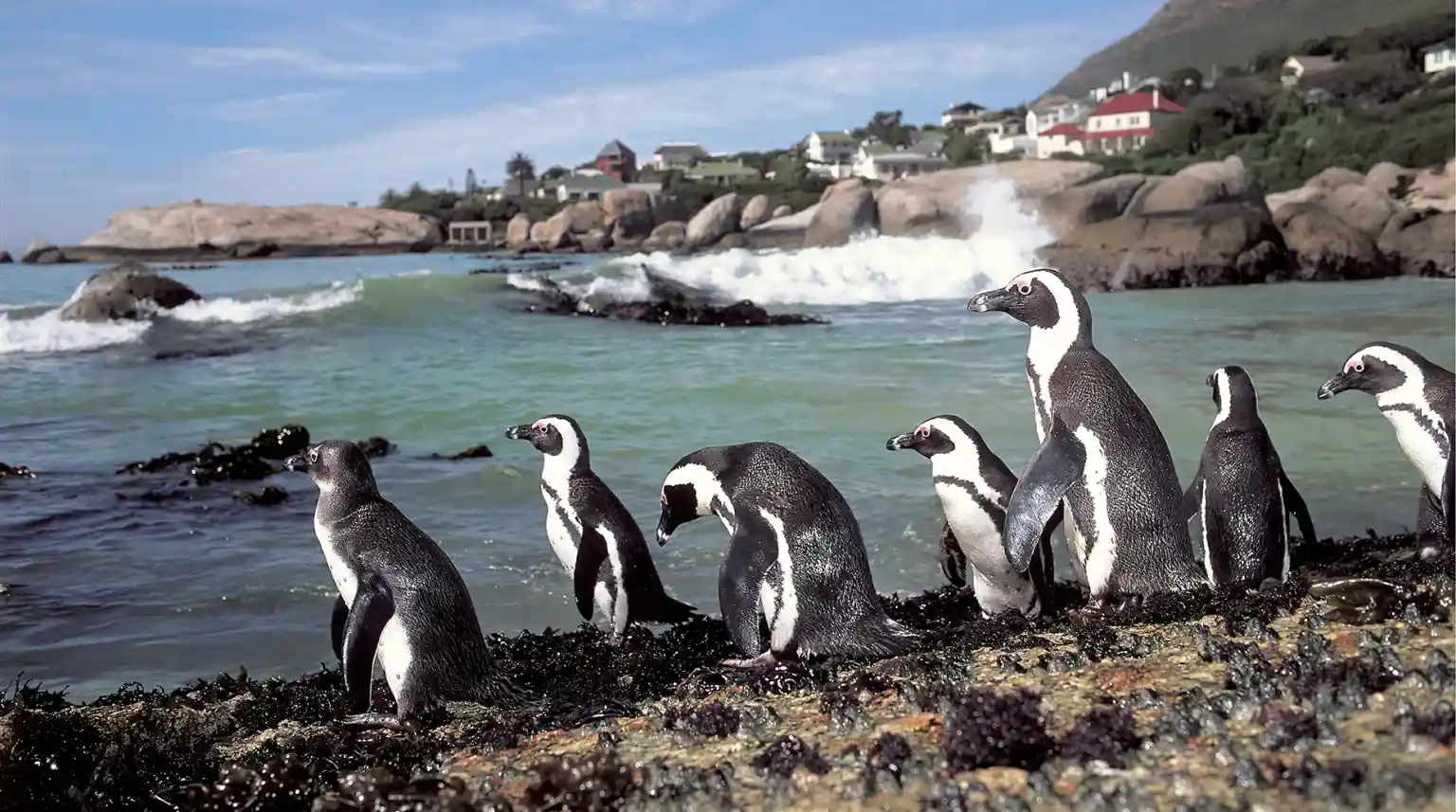

Cape Town: The Environmental Department of the City of Cape Town will join the global community in celebrating the World Penguin Day on Saturday, April 25, 2026. The world will honour all the 18 species of these flightless icons, as the City is issuing reminder on the crisis of the African Penguin that is now fighting for its very survival.
The African Penguin (Spheniscus demersus) is the only species endemic to the South African and Namibian coastlines. It is now among the most “at-risk” populations globally.
Deputy Mayor and Member of the Mayoral Committee for Spatial Planning and Environment – Alderman Eddie Andrews said that the city joins this year’s World Penguin Day celebrations with trepidation and worry. Following the African Penguin’s 2024 uplisting to Critically Endangered on the International Union for Conservation of Nature (IUCN) Red Data List, there are now fewer than 10,000 breeding pairs left.
Without any drastic intervention, scientists predicted that this charismatic species could be extinct in the wild by 2035, said Andrews.
The African Penguin is a ‘keystone species’, that is holding Cape Town’s marine ecosystem together. Beyond ecology, they are a vital engine for Cape Town’s local economy.
The Simon’s Town Penguin Colony (STPC) and Robben Island are world-famous landmarks that draw hundreds of thousands of international tourists. Their presence supports a vast network of local businesses, tour operators, and hospitality services, reinforcing Cape Town’s status as a premier global destination for nature-based tourism.
Alderman Andrews further stated that the penguins face a perfect storm of environmental and human-induced threats. He can reduce these to three:
- The first being climate change, where erratic weather patterns disrupt natural cues for moulting and breeding, leading to nest abandonment during extreme heat or floods.
- The second is food scarcity where commercial fishing of sardines and anchovies forces penguins to travel further for food, leaving chicks exposed to land-based predators like mongooses, caracals and kelp gulls.
- The third factor is urban pressure where we are seeing Simon’s Town penguins, which are a land-based colony, face unique urban challenges, including domestic pet attacks, honey-bee stings, vehicle traffic and human disturbance.
To combat these threats, the City of Cape Town continues to invest in a dedicated Penguin Ranger Team, it is a partnership project with SANCCOB. Together with SAN Parks rangers, they can cover the STPC, False Bay, and the Atlantic Seaboard, these specialist seabird rangers are the frontline of defence. Their critical work mainly includes:
Nest Monitoring: Collecting data on population numbers, chick health and ultimately breeding success.
Rescue and Rehabilitation: Responding to callouts for injured, oiled, or diseased birds. Rescued birds are sent to Southern African Foundation for the Conservation of Coastal Birds (SANCCOB), which maintains an 80% rehabilitation and release success rate.
Habitat Management: Minimising human-wildlife conflict and managing the “urban fringe” where penguins and people meet.
City of Cape Town urges residents and tourists to act as guardians of the colony. If residents and visitors find a distressed or injured penguin, they are advised not to handle the bird. Instead, send a WhatsApp message to the Penguin Ranger Team with a clear picture, a description of the bird’s condition and a GPS location pin.
Deputy Mayor Andrews concluded by saying that the 2035 African Penguin extinction prediction does not have to be the reality. By working together to protect these flightless characters, they are ensuring that the South African coastline remains pristine for generations to come.