
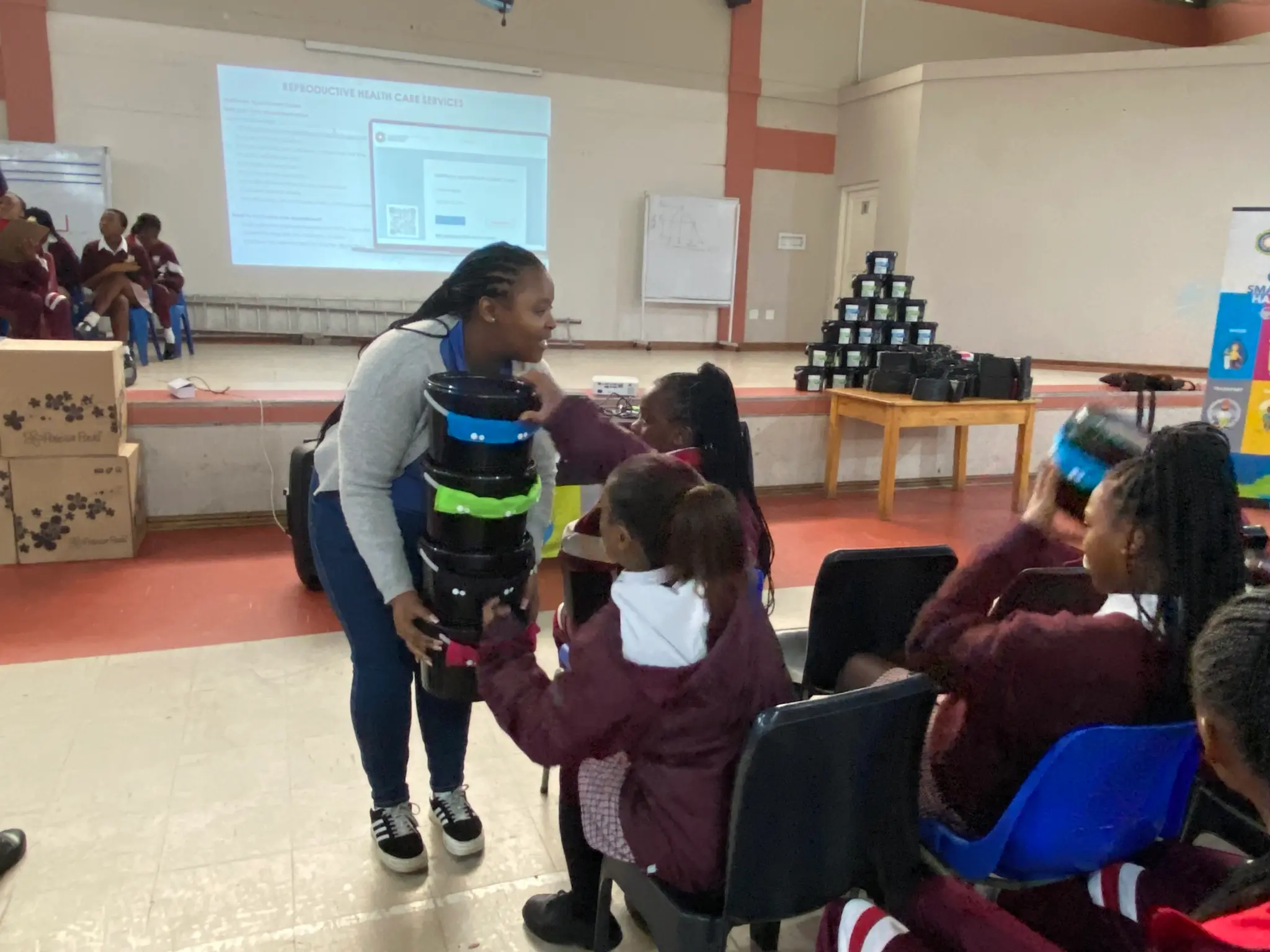

Cape Town: The Environmental Management Department of the city has been rolling out its Smart Flo Programme at various high schools this month, as an initiative which distributes Smart Flo kits to Grade-8 girls. These kits provide them with access to high quality and environmentally friendly sanitary pads to preserve their dignity during menstruation.
The team was out at New Eisleben High School in Nyanga on April 21, 2026. They will distribute more kits to girls at Oscar Mpetha High School in Nyanga on Thursday, April 23, 2026.
Smart Flo Programme by the City of Cape Town provides education and awareness on the environmental impacts of using and disposing improper sanitary objects as well as reproductive health issues.
Deputy Mayor and Member of the Mayoral Committee for Spatial Planning and Environment – Alderman Eddie Andrews stated that these Smart Flo kits and the environmental education go hand in hand with the distribution of them. It is so beneficial to these girls in the communities and addresses the social challenge of rags being used as substitution for commercial sanitary products.
The programme further assisted the City in educating residents on the detrimental knock-on effects that the flushing of inappropriate items and materials has on the infrastructure and resources. This issue is reflective of broader socio-economic challenges, particularly in the low-income communities.
“I am therefore so encouraged that the teams were able to distribute these reusable sanitary products to Grade-8 girls this month as we believe it will truly assist them to manage their menstruation without shame, fear or interruption to their education,” said Andrews.
Member of the Mayoral Committee for Water and Sanitation – Councillor Zahid Badroodien stated that the City’s Directorate is proud to have been a key partner in the roll out of the Smart Flo kits in Nyanga this month. The use of these reusable sanitary pads will result in a reduction of waste and a significant financial saving for these girls.
The promotion of interventions such as this programme is essential at the moment as the City of Cape Town has been experiencing a rise in foreign objects being found as the cause of 61% of sewer blockages. Growing in prevalence has been washing rags, towels and single-use sanitary pads/tampons, which have been found to be severely detrimental to the sewer system infrastructure.
Badroodien mentioned that the volumes of these towels are of concern due to the additional effort and resources it takes from the Water and Sanitation teams to clear these screens. Sometimes up to three times a day to allow flow and prevent further damage.
The City of Cape Town identified Gugulethu, Bellville South, Nyanga, Bonteheuwel, Manenberg, Greenlands, Dunoon, Boston, Bishop Lavis, Kuyasa and Khayelitsha as the top ten suburbs where sewer blockages has been caused by rags.
The recipients of these Smart Flo Kits will also receive sanitary kits that will last them up to five years to support them with more sustainable sanitary options. Each kit includes the reusable sanitary pads and a cleaning kit which consists of a bucket; washing powder; soap; spirit vinegar and a menstrual health information brochure.