
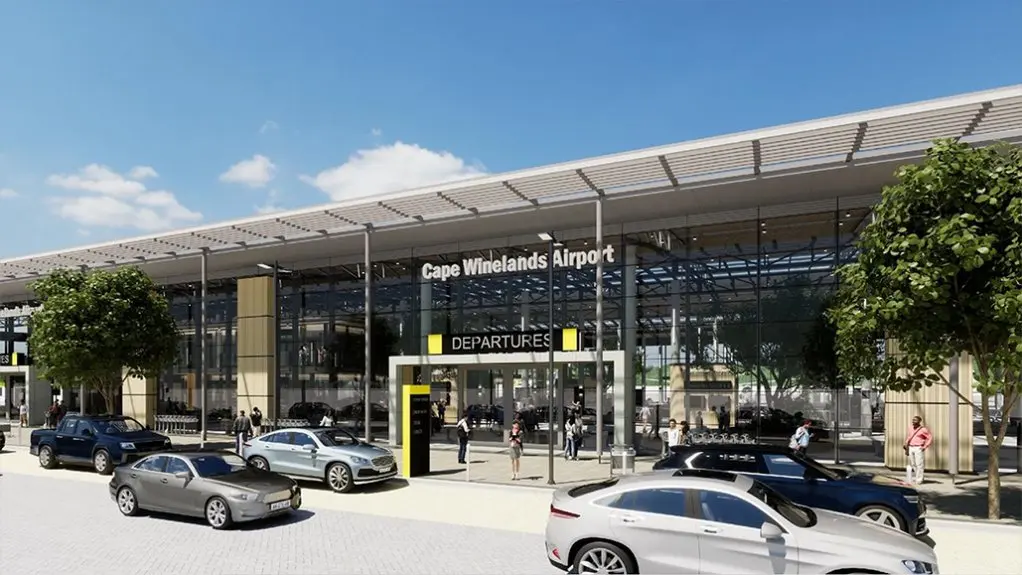

Cape Town is about to transform soon. A R8 billion new airport near Durbanville has just received final approval and construction will kick off in the fourth quarter of 2026. The Cape Winelands Airport (CWA) will become Cape Town’s second international airport, with the first phase opening in 2028. The project includes a new terminal, upgraded runways, cargo facilities, hotels and sustainable aviation infrastructure.
This means more international flight routes, lower airline costs and easier access to the region’s famous wine country and beaches. The redevelopment is being handled by a private consortium and is expected to significantly boost regional travel and visitor capacity. Early travellers can visit before 2028 and can experience the current charm before the major expansion transforms the area.
Modest Airfield to Influential Commercial and Aviation Centre
The Cape Winelands Airport plan delineates a strategic vision for the airport’s evolution from a modest airfield to an influential commercial and aviation centre. The blueprint underscores the airport’s ambitious goal to emerge as a global leader in sustainability, technology and growth rates. More than just an aviation hub, the strategy emphasizes the airport’s potential as an engine for regional economic development and local community inclusion.
Located in the iconic city of Cape Town, the destination is celebrated by global and local travellers alike, Cape Winelands Airport is poised to harness unparalleled opportunities. Its strategic importance transcends tourism, that aligns with Cape Town’s thriving business landscape. The core goal is to establish a cohesive link with Cape Town, that will foster a partnership which mutually benefits both the city and the airport.
The aviation sector is broad and complex, with multiple unique, heterogenous sub-sectors within it, and each of them face unique constraints and opportunities. CWA will fulfil numerous key roles within the aviation sector, by addressing these constraints and opportunities, and significantly improving the socio-economic landscape within the region.
View this post on Instagram
This is achieved by performing and facilitating the following functions:
- Scheduled Airline Services for domestic and international passenger and cargo operations.
- General Aviation for domestic and international, unscheduled and private operations.
- Alternate Airport for fuel planning purposes and environmental savings.
- Reliever Airport adding redundancy and diversion capability for aircraft in the region.
- Logistics Hub catalysing multi-modal commercial activity in the region and stimulating economic growth.
- Commercial Property Developments stimulated and enabled by the above.
Development Plans
The airport’s transformation will include the development of key airport infrastructure such as:
Realigned Runway and Associated Aircraft Parking Stands
Currently, the airport has four runways. In the future development plan, one of these will be realigned and extended to a Code-4F runway built to a new orientation, capable of accommodating wide-body aircraft. In addition, aircraft parking stands will also be included.
New Terminal Building
A boutique terminal building including state-of-the-art processing facilities will be built. The terminal building will leverage off the latest technology and provide modern solutions for check-in, baggage handling and security. Shop, work, connect and play.
Cargo Processing Facility
The cargo facility will be a key part of the development. The success of airline operations is directly linked to their ability to fill the belly of the aircraft. A cargo processing facility that will be built with ease of access to the airside.
New Hangarage
The development includes additional hangars needed to serve the General Aviation, Business Aviation and Airline sectors by providing an environment for aviation to flourish.
Fuelling Facilities
Aviation fuel storage comprising JetA1 and Avgas will be included, with special spatial allocation for sustainable aviation fuels (SAFs) in line with the aviation industry’s move towards a greener future.
A fuelling station is expected to be built at the entrance to the airport. As it is typically seen globally, they service airport users, but also individuals in proximity to the airport.
Other Planned Infrastructure
- Hotel accommodation for passengers and flight students
- Heliport
- Warehousing and logistics facilities
The combination of transport linkages and commercial activity can galvanise demand for light-industrial facilities such as logistics, warehousing and even air freight (depending on sufficient flight connectivity). Each of these activities generates non-aeronautical revenue that can support the development of the airport and create a diversified business.
Why A Second Airport?
Airline Capacity
Especially during peak periods, Cape Town needs a second airport to handle the ever-increasing demand.
General Aviation Capacity
The region’s airfields suffer from a major hangar shortage, prohibiting any further growth. In addition, General Aviation (GA) activity is not supported at the main commercial airport (Cape Town International Airport – CTIA) due to the airspace and runway congestion it creates. Moving GA to Cape Winelands Airport will therefore even reduce inefficiencies at CTIA.
Redundancy
Cape Town is an isolated city. A new airport is needed in order to add close-by redundancy to the region in case of emergency, unsuitability or unavailability at other airports in the region. Such events include runway closures, equipment failures and low visibility operations.
Fuel Planning Optimisation
Cape Winelands Airport as a much closer destination alternate can be used by airlines in fuel planning for flights inbound to Cape Town, to optimise their operations by lowering the quantum of reserve fuel carried each flight. This enables substantial weight savings, thereby reducing payload restrictions and fuel consumption each flight.
Positive Environmental Impact
Because of the savings in fuel consumption that Cape Winelands Airport will enable, carbon emissions will also decrease, benefiting the entire airline industry.
Improved Air Access
Because of the increased capacity and optimised aircraft performance that Cape Winelands Airport enables, the business case improves for air travel into the region, thereby creating new opportunities for air access and route development that otherwise would not be possible.
Affordability & Accessibility
Cape Winelands Airport is a convenient option for air travel for residents of the north and eastern parts of the region. This reduction in travel time, combined with the improved business case for airlines, creates an environment for more affordable and accessible air travel, for more South Africans.
Socio-economic Growth
Airports are known drivers of commercial activity. Cape Winelands Airport will serve as a catalyst for economic growth in the region, attracting significant investment and boosting sustained job creation in the Cape’s future growth corridor.
Together, Growthpoint Properties and Cape Winelands Airport are creating a platform for long-term investment, innovation and opportunity that will strengthen the Western Cape’s logistics, trade and tourism network while contributing to economic growth and job creation.