

South Africa: WHO Director General – Tedros Adhanom Ghebreyesus declared the Ebola disease outbreak in Congo and neighbouring Uganda. A public health emergency of international concern was announced on Sunday, May 17, 2026 after receiving over 300 suspected cases and 88 deaths.
In a post on X, the World Health Organization said the outbreak does not meet the criteria of a pandemic emergency like the COVID-19 pandemic and advised against the closure of international borders.
After having consulted the #DRC and #Uganda where the #Ebola disease caused by Bundibugyo virus is known to be currently occurring, I determine that the epidemic constitutes a public health emergency of international concern (PHEIC), as defined in the provisions of IHR.
My full… pic.twitter.com/zhYVEyxSI8
— Tedros Adhanom Ghebreyesus (@DrTedros) May 17, 2026
Considering this, health authorities said that the current outbreak was first confirmed on Friday, May 15, 2026 was caused by the Bundibugyo virus, a rare variant of the Ebola disease that has no approved therapeutics or vaccines.
The WHO stated that the outbreak could be much larger, given the high positivity rate of the initial samples and the increasing number of suspected cases being reported. The DRC accounts for all, except the two cases, both of which were reported in neighbouring Uganda.
WHO officials first reported the spread of the virus in the DRC’s eastern province of Ituri, close to Uganda and South Sudan, on Friday. On Saturday, the Africa Centres for Disease Control and Prevention (ACDCP) reported 336 suspected cases and 87 deaths. Later on Sunday, a laboratory confirmed a case in the major DRC city of Goma, under the control of the Rwanda-backed M23 militia.
Director of the Congolese National Institute for Biomedical Research (INRB) – Professor Jean-Jacques Muyembe said that a positive case in Goma has been confirmed by tests carried out by the laboratory. It involves the wife of a man who died of Ebola in Bunia, who travelled to Goma after her husband’s death, whilst already infected.
As per the sources, the DRC/Rwanda border closure has put everybody in the region on high alert. The positive case in Goma demonstrates why Rwanda’s preventive measures were “justified”.
Uganda on Saturday confirmed one case, that said was imported from the DRC, saying the patient died at a hospital in its capital, Kampala. The WHO then confirmed a second case that had been reported in Kampala, adding that the two cases did not appear to be linked and both patients had travelled from the DRC.
View this post on Instagram
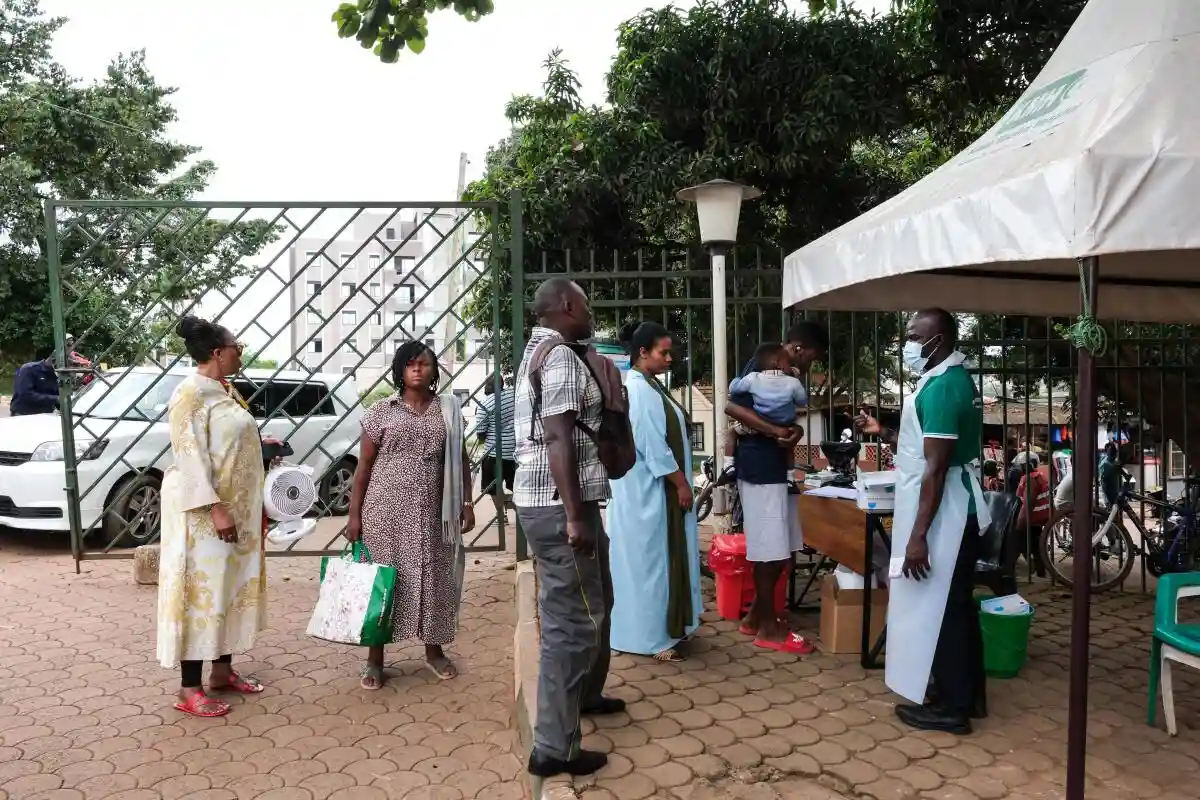
Uganda’s health authorities have implemented measures at the hospital where the Congolese man died. Health workers at the hospital “are testing people, they’re checking for fever, they’re sanitising people and they’re giving them masks”. Government officials said that they managed to trace people that this man interacted with, and are now monitoring them.
President Yoweri Museveni has stated that there is no need for alarm, as the situation is under control, the border with DRC has not been closed yet, but government officials say that they are monitoring all this very closely.
The DRC-Uganda outbreak poses a public health risk to neighbouring countries, the United Nations health agency said, “advising countries to activate their national disaster and emergency management mechanisms and undertake cross-border screening and screening at main internal roads.”
WHO advised immediate isolation of confirmed cases, allowing only restricted national travel and no international travel until 21 days after exposure. It urged countries not to close their borders or restrict travel and trade, as this could lead to people and goods making unmonitored border crossings.
The often fatal and highly contagious virus, causes fever, body aches, vomiting and diarrhoea, spreads through direct contact with the bodily fluids of infected people, contaminated materials or those who have died from the disease.